Posts

An A-Frame for WebVR

Image
  The FireFox folks on the MozVR team released this month the first version of A-Frame: an open source framework for creating WebVR experiences with very simple markup. For those that are unfamiliar with WebVR, it is the term used to describe virtual reality experiences that are accessible via a Web browser (opposed to VR experiences that are downloaded executables). Currently WebVR only works in the developer builds of Google's  Chromium  browser and Mozilla's  FireFox Nightly build. There are a few options for WebVR including  X3DOM , the standards based framework I use for my WebVR scenes. A-Frame is simply another Javascript framework for WebVR and since it leverages WebGL, the demos and scenes are viewable in any updated browser.   "A-Frame makes it easy for web developers to create virtual reality experiences that work across desktop, iPhone (Android support coming soon), and the Oculus Rift. We created A-Frame to make it...

Virtual Reality is getting Religion

Image
It has finally happened, virtual reality is getting religion! It started yesterday when I read a post on UploadVR (a great resource for VR and related news) about a Bible app for Google Cardboard called Bible VRX . Bible VRX, developed by Derek Ham, puts users in different scenes from the Bible with, "a mission to use advanced technology to communicate the stories of the Bible, stories of faith, hope, and love”. One can see in the video below some of the scenes it is possible to visit. According to the article this app is just a prototype that Derek hopes to build out with other scenes that have music, narration, and animated effects.     So this got me thinking. Religion is such a integral part of humanity and this is probably the first virtual reality application I have heard of anyone doing. There were plenty of digital religious experiences back in the heyday of virtual worlds so surely this cannot be the case I thought. To Google I went to find othe...

My interview with Voices of VR

Image
So I was at the SEAVR 2015 event where I bumped into Kent Bye, the producer of the Voices of VR Podcast . I gave this quick interview on  Using Open Standards to Deliver VR Over the Web  and thank Ken for the honor of being on his show. Based out of Portand Oregon, Kent travels to various conferences to find the most compelling VR experiences, developers, and academics to feature on the podcast. Make sure to check out his site and follow him on Twitter @kentbye . Keep up the great work Kent!

Bullet Train, Epic’s Unreal Shooter that takes VR into the fast lane

Image
Epic Games , the company behind the Unreal game engine, recently showed off a new tech demo at Oculus Connect that uses the Oculus Touch dual-handed motion controllers. Named Bullet Train, the mini-game is an awesome virtual reality first person shooter. Like with the Sixense Stem hand controllers, the Oculus Touch takes the VR experience to a whole new level. Beyond using the controllers to grab, aim, and shoot weapons, players can teleport around the game level and use a slow motion feature to dodge or even grab bullets (that can be thrown back at enemies). I love the folks over at Epic and I got the chance to have my own personal demo of Bullet Train when I visited their Seattle office earlier this week. Here is my colleague Greg Howes that went before me giving Bullet Train his all.

Linden Lab Aims to Build the WordPress of Virtual Reality

Image
Second Life creator Linden Lab has announced that it has begun inviting creative people to test its new virtual reality world, code-named Project Sansar . Project Sansar is scheduled to open to the public in 2016, and its aim is to democratize virtual reality. Much like Second Life, the platform aims to empower people to easily create, share, and monetize their own multi-user, interactive virtual experiences, without requiring engineering resources. Linden Lab said the platform will enable professional-level quality and performance with “exceptional visual fidelity, 3D audio, and physics simulation.” Project Sansar will be optimized for VR headsets, but also accessible via PCs and mobile devices. “We want to lower the barrier of entry for VR experience creation,” said Linden Lab CEO Ebbe Altberg in a statement. “Project Sansar will do for virtual experiences what WordPress has done for the web: empower a broad range of people to create with professional quality and reach globa...

TIME to make Virtual Reality look stupid

Image
 TIME magazine just released its latest cover featuring Palmer Lucky , the creator of the Oculus Rift virtual reality headset, in probably one of the dumbest poses imaginable. Sure those in a headset can feel like a rock star, but they look like a dork in the process and this cover definitely doesn't help this image. Of course it did not take long for the Internet to respond accordingly. Thanks TIME! *sigh #facepalmer

Autodesk's Stingray gets into the Game

Image
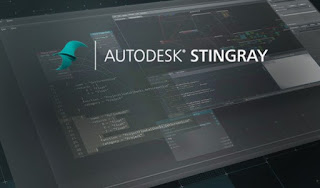
 With their initial announcement of stepping into the game development arena made back in March, Autodesk finally launched their Stingray game engine this past week. Autodesk is going after small to mid-sized studios that don't have large programming teams so ease of use and simplicity to create content is a must if Stingray wants to compete against game engines like Unreal 4 and Unity 5. Built around the Bitsquid engine it bought last year, it has equipped the engine with node-based scripting tools to make coding a drag-and-drop affair. One advantage to Stingray is that Autodesk product users (Maya, 3DS Max, MayaT) will benefit from extra integration over these other engines. Autodesk will also be offering Stingray's C++ source code (for a fee) to companies that want deeper customization. "Live Link" is a Stingray feature for multi-platform testing. With Live Link, you can tweak a model inside Maya LT and see the changes in Stingray on a given platform...